DIY Builds
So you want to build something. Whether that's saving money, learning how it all fits together, or deploying a node in a spot a commercial unit can't reach - this section has you covered.
Affiliate links
Amazon links on this page use our affiliate tag. You pay the same price - commissions go directly toward hardware for CSRA community relay nodes. If you're buying anyway, many thanks for using our links!
Choose Your Board
All DIY MeshCore nodes - whether a pocket-sized personal radio, a tree-hung solar repeater, or a magnetic vehicle mount - start with one of two base platforms. The board you pick goes into whatever enclosure fits your deployment. Both run the same MeshCore firmware and work on the CSRA network.
Seeed XIAO + Wio-SX1262
The lowest-cost option at around $13 for the boards alone. The XIAO pairs with the Wio-SX1262 LoRa module and comes in two variants - pick based on your priorities:
XIAO nRF52840 - extremely low power consumption, significantly extending battery life. The better choice for any battery-powered deployment where the node will run unattended.
XIAO ESP32-S3 or C6 - adds WiFi connectivity and costs a bit less, but draws more power. A good choice if you need WiFi or are running on wired/solar power and don't mind the trade-off.
No display, battery, or enclosure is included with either variant - you supply those based on your use case.
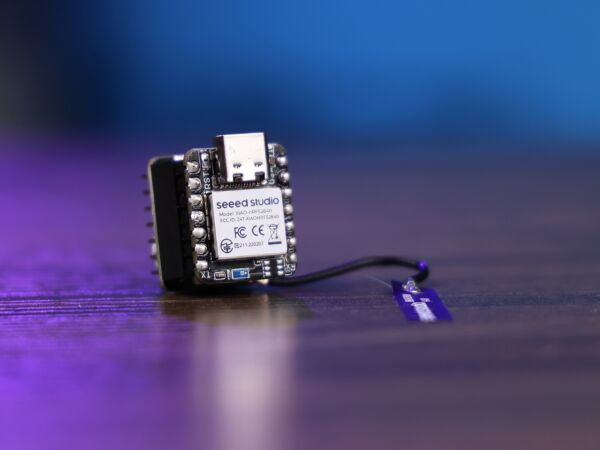
~$13
RAK WisBlock
More capable and modular - add GPS, sensors, or a display as your build requires. Two base board variants are common; both run the same firmware and work fine for any MeshCore use case. Get whichever is in stock - availability varies.
19007 - more sensor expansion slots, slightly larger. The most commonly stocked variant.
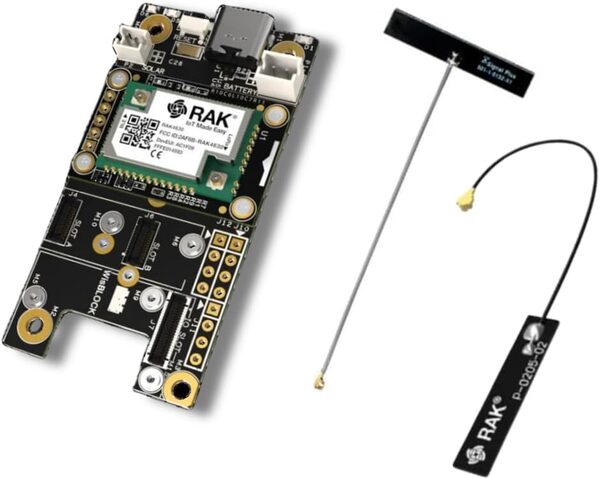
19003 - smaller footprint, fewer expansion slots, usually a bit cheaper. Good fit for compact custom enclosures.
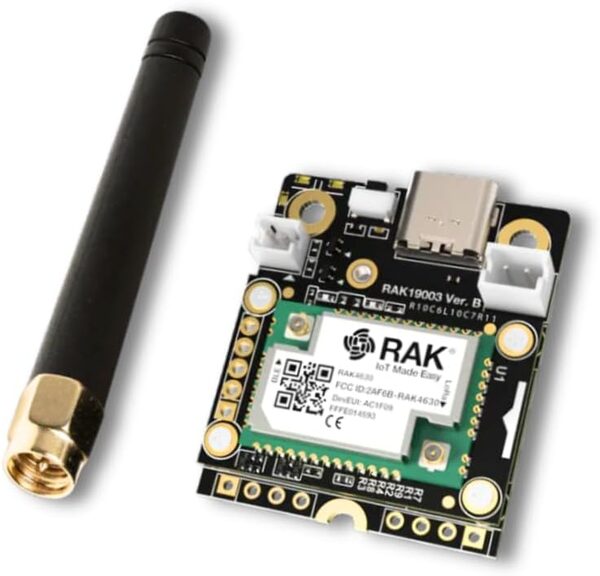
Buy the Starter Kit - not just the base board
RAK sells the base board (19003/19007) and the LoRa radio module (4630/4631) separately, which can be confusing. You need both. The Starter Kit bundles them already assembled and is typically the most cost-effective way to get both at once. Don't accidentally order just one or the other.
$25–60 depending on configuration
Amazon Rokland (19007) Rokland (19003)
Build Examples
Here are a few builds using the platforms above. Each pairs a board with an off-the-shelf enclosure suited to a particular deployment style.
Tree Node - Harbor Breeze Solar Light Conversion
A $10 Harbor Breeze outdoor solar security light from Lowe's becomes a solar-powered, weatherproof MeshCore repeater with a RAK WisBlock radio inside. Under $50 total, hangs from a tree branch, and field-proven in the CSRA.
Magnetic Mount Node
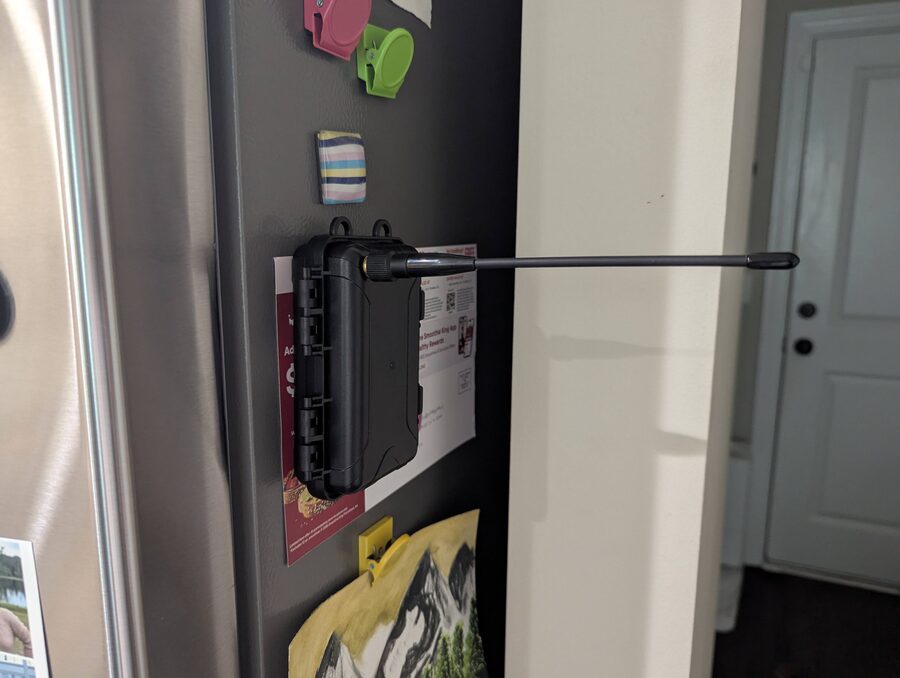
A node in a magnetic mount enclosure sticks firmly to vehicles, metal rooftops, or any steel surface - easy to place and reposition without tools. Works as a personal node or a repeater depending on firmware configuration.
The board inside is up to you. The example build below uses a Seeed Wio Tracker L1, but a RAK WisBlock 19003, an XIAO kit, or most other compact boards will fit the same enclosure. Pick whatever you have on hand or can source easily.
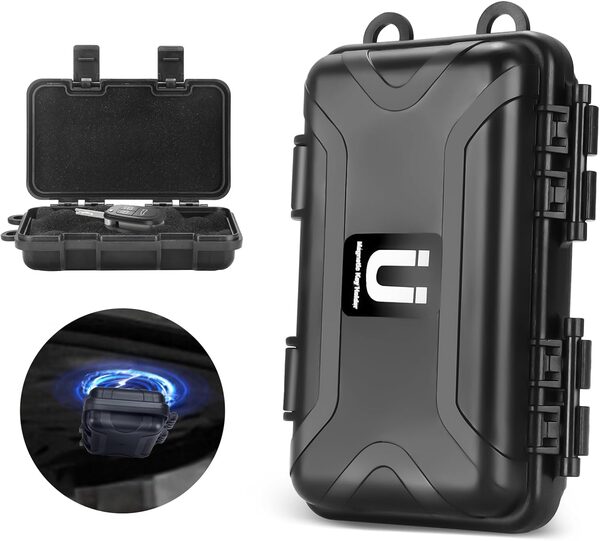
| Part | |
|---|---|
| Magnetic mount enclosure | Amazon |
| 915 MHz SMA antenna | Amazon |
Antenna connector type
Check your board's connector before ordering - some boards (like the Wio Tracker L1 Pro) ship with RP-SMA instead of SMA. See the Antennas section for details.
Example board: Seeed Wio Tracker L1
The Wio Tracker L1 is a compact bare board with LoRa and GPS built in - no separate LoRa module needed. Fits neatly in the enclosure alongside a small LiPo battery.
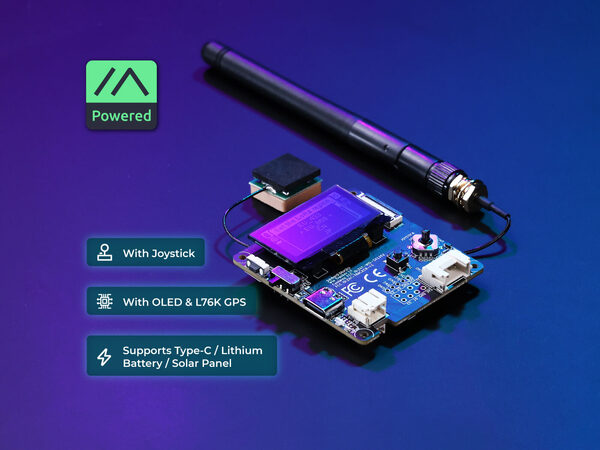
~$20
Flash MeshCore firmware using the Getting Started guide, then set the device role as needed in the MeshCore app settings.
Build photos
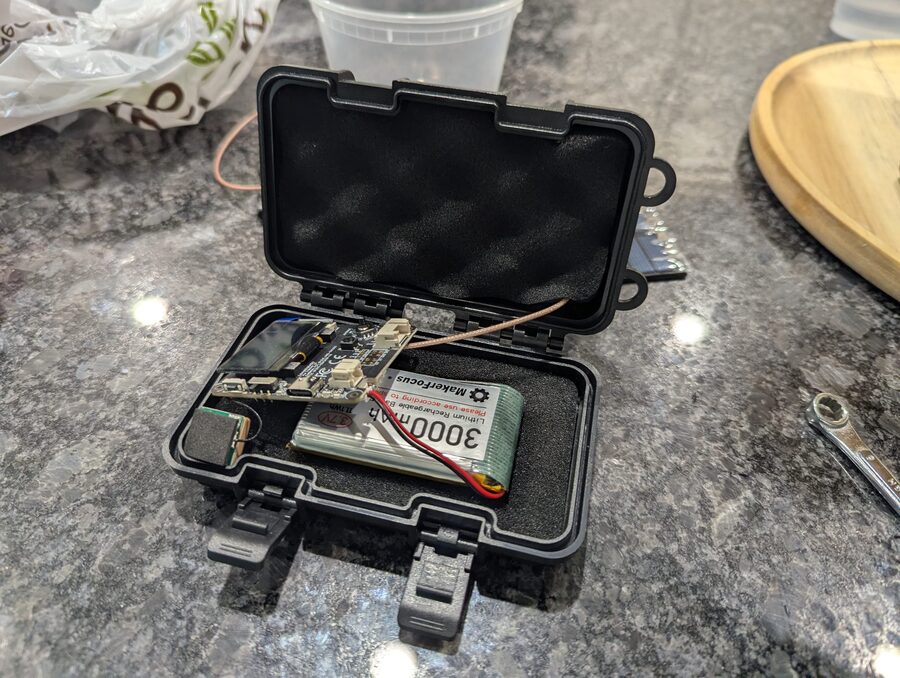
Wio Tracker L1 and 3000mAh LiPo battery seated in the foam-lined enclosure, with a copper SMA pigtail routed to the connector.
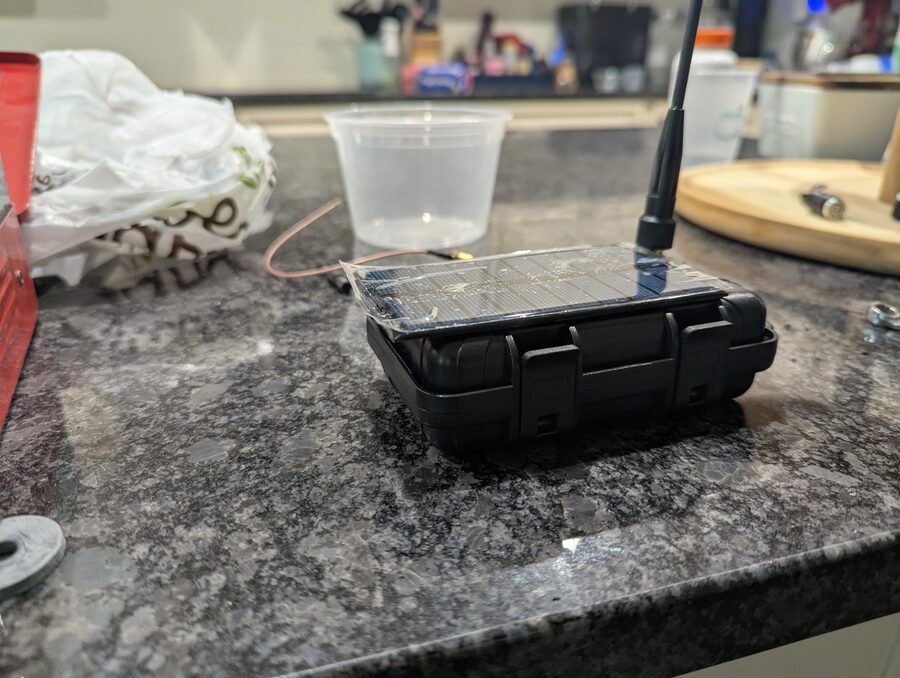
Enclosure closed with a small solar panel bonded to the lid and antenna attached.
Finished node deployed on a metal surface - the magnetic base holds firm with no fasteners needed.
Observer Node: Raspberry Pi + Wio SX1262
A Raspberry Pi Zero 2W paired with a Wio SX1262 LoRa board makes a ~$45 always-on observer you can leave plugged in anywhere with power and WiFi. Runs openHop Repeater and meshcore-bot, feeds the letsmesh.net observer network, and stays accessible over SSH via WireGuard after deployment.
Full build and configuration guide
Observer from a Spare Companion + Computer
Already have a spare companion node and an always-on computer? Skip the build entirely. Run meshcore-packet-capture on the computer, connect to the node over USB or TCP, and publish live mesh traffic to MQTT - no soldering or dedicated hardware.
Next steps for any build
- Getting Started guide - flash MeshCore firmware onto your board
- Hardware Guide - antennas, enclosures, and power options
- Getting Started guide - pair to the app and join the CSRA network